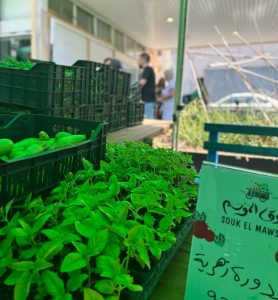
Souk El Mawsam Farmer’s market in Geitawi area, Beirut
Territorial Food Strategies
While working on specific initiatives is important to show concrete actions and success, we also focus on local governance for the food system. Food Strategies aim at building a common vision for a territory to transition to a more sustainable food system, where production, processing, distribution, consumption, and waste management of food occurs within a specific territory. A well-functioning territorial food system seeks to decentralize power and capital, most often in the hands of large agrofood industries, to the community. A territorialized food system works to promote production, distribution, and consumption practices which respect people and planet, reduce waste along the food chain, promote local products, and more fair value sharing within a given territory. We are currently working in Zgharta Caza and in Zahle and surrounding villages. A publication will be dedicated for this work soon.
استراتيجيات الغذاء الإقليمية
بينما يعد العمل على مبادرات محددة أمرًا مهمًا لإظهار خطوات ملموسة والنجاح ، فإننا نركز أيضًا على الحكم المحلي لنظام الغذاء. تهدف استراتيجيات الغذاء إلى بناء رؤية مشتركة لمنطقة معينة للانتقال إلى نظام غذائي أكثر استدامة ، حيث يتم إنتاج الأغذية ومعالجتها وتوزيعها واستهلاكها وإدارة نفاياتها داخل تلك المنطقة. يسعى نظام الغذاء الإقليمي الملائم إلى تحقيق اللامركزية في السلطة ورأس المال ، والذي يكون في أغلب الأحيان في أيدي الصناعات الزراعية الغذائية الكبيرة ، في المجتمع. يعمل نظام الغذاء الإقليمي على تعزيز ممارسات الإنتاج والتوزيع والاستهلاك التي تحترم الناس والكوكب ، وتقلل من النفايات على طول السلسلة الغذائية ، وتروج للمنتجات المحلية ، وتقاسم القيمة العادلة داخل منطقة معينة. نعمل حاليا في قضاء زغرتا وكذلك قضاء زحلة والقرى المجاورة. سيتم تخصيص منشور لهذا العمل قريبًا.
Mobilizing and Organizing
Supporting collectives, networking between stakeholders, and enhancing partnerships, is at the core of many of our projects. This work includes facilitating meetings with farmers to organize collectively, bringing stakeholders to build a food strategy in a specific territory, and supporting consumers to organize in a cooperative.
التعبئة والتنظيم
يعد دعم المجموعات والتواصل بين أصحاب المصلحة وتعزيز الشراكات في صميم العديد من مشاريعنا. يتضمن هذا العمل تسهيل الاجتماعات مع المزارعين للتنظيم الجماعي ، وجلب أصحاب المصلحة لبناء استراتيجية غذائية في منطقة معينة ، ودعم المستهلكين للتنظيم في تعاونيات.
MORE INFORMATION معلومات اكثر
What is agroecology?
Agroecology can be understood as a science, a movement, and a practice. More than an agricultural science promoting ecological farming techniques, agroecology rethinks relationships in a food system. As a movement, it recognizes the conventional food system’s systemic devaluation of food producers and peasant cultures around the world and calls for more equitable and holistic food system organization. The conventional (or globalized) food system model is structured by large agroindustries who control both agricultural inputs (i.e. seeds, pesticides, herbicides) and end products (i.e. highly processed goods, distribution of fresh produce). This has led to the impoverishment of domestic farmers (due to inability to compete with prices of the global market), the depletion of natural resources and environmental degradation (due to increased intensity and scale of agriculture), as well as wasteful consumption practices (due to a phenomena called the ‘cheaper food paradigm’).
ما هي الزراعة البيئية؟
يمكن فهم الزراعة البيئية على أنها علم وحركة وممارسة. أكثر من علم زراعي يروج لتقنيات الزراعة البيئية ، تعيد الإيكولوجيا الزراعية التفكير في العلاقات في نظام غذائي. كحركة ، فهي تدرك التخفيض المنهجي لنظام الغذاء التقليدي لمنتجي الأغذية وثقافات الفلاحين حول العالم وتدعو إلى تنظيم نظام غذائي أكثر إنصافًا وشمولية. يتم تنظيم نموذج النظام الغذائي التقليدي (أو المعولم) من قبل الصناعات الزراعية الكبيرة التي تتحكم في كل من المدخلات الزراعية (مثل البذور ، ومبيدات الآفات ، ومبيدات الأعشاب) والمنتجات النهائية (أي السلع عالية المعالجة ، وتوزيع المنتجات الطازجة). وقد أدى ذلك إلى إفقار المزارعين المحليين (بسبب عدم القدرة على التنافس مع أسعار السوق العالمية) ، واستنفاد الموارد الطبيعية والتدهور البيئي (بسبب زيادة كثافة الزراعة وحجمها) ، وكذلك تبذير ممارسات الاستهلاك (بسبب لظاهرة تسمى “نموذج الغذاء الأرخص”)
Why do we use the term food sovereignty instead of food security?
According to the global Peasant movement La Via Campesina, “food sovereignty is the right of peoples to healthy and culturally appropriate food produced through ecologically sound and sustainable methods, and their right to define their own food and agriculture systems”. Unlike food security, food sovereignty isn’t just about making food accessible for all, because it is entirely possible for people to be food secure under a dictatorship for example. Food sovereignty involves direct democratic participation of food producers, consumers, and everyone in between to determine to what extent they want to be self-reliant, to define their own agricultural practices and to regulate domestic food production and trade to achieve economic and environmental sustainability. It puts people at the center of the food system, instead of profit-driven international corporations. It recognises that in order to achieve sovereignty over our food, sustainability is essential, and hence promotes the use of agroecology as a tool.
لماذا نستخدم مصطلح السيادة الغذائية بدلا من الأمن الغذائي؟
وفقًا للحركة الفلاحية العالمية La Via Campesina ، فإن “السيادة الغذائية هي حق الشعوب في الحصول على غذاء صحي ومناسب ثقافيًا يتم إنتاجه من خلال أساليب سليمة بيئيًا ومستدامة ، وحقهم في تحديد نظمهم الغذائية والزراعية”. لا تتعلق السيادة الغذائية بجعل الغذاء متاحًا للجميع فقط ، لأنه من الممكن تمامًا للناس أن يكونوا آمنين غذائياً في ظل نظام ديكتاتوري على سبيل المثال. تتضمن السيادة الغذائية المشاركة الديمقراطية المباشرة لمنتجي الأغذية والمستهلكين وكل شخص في الوسط لتحديد إلى أي مدى يريدون الاعتماد على الذات ، وتحديد ممارساتهم الزراعية الخاصة وتنظيم الإنتاج الغذائي المحلي والتجارة لتحقيق الاستدامة الاقتصادية والبيئية. إنه يضع الناس في منتصف النظام الغذائي ، بدلاً من الشركات الدولية التي يحركها الربح. وهي تدرك أنه من أجل تحقيق السيادة على طعامنا ، فإن الاستدامة ضرورية ، وبالتالي تعزز استخدام الزراعة البيئية كأداة.